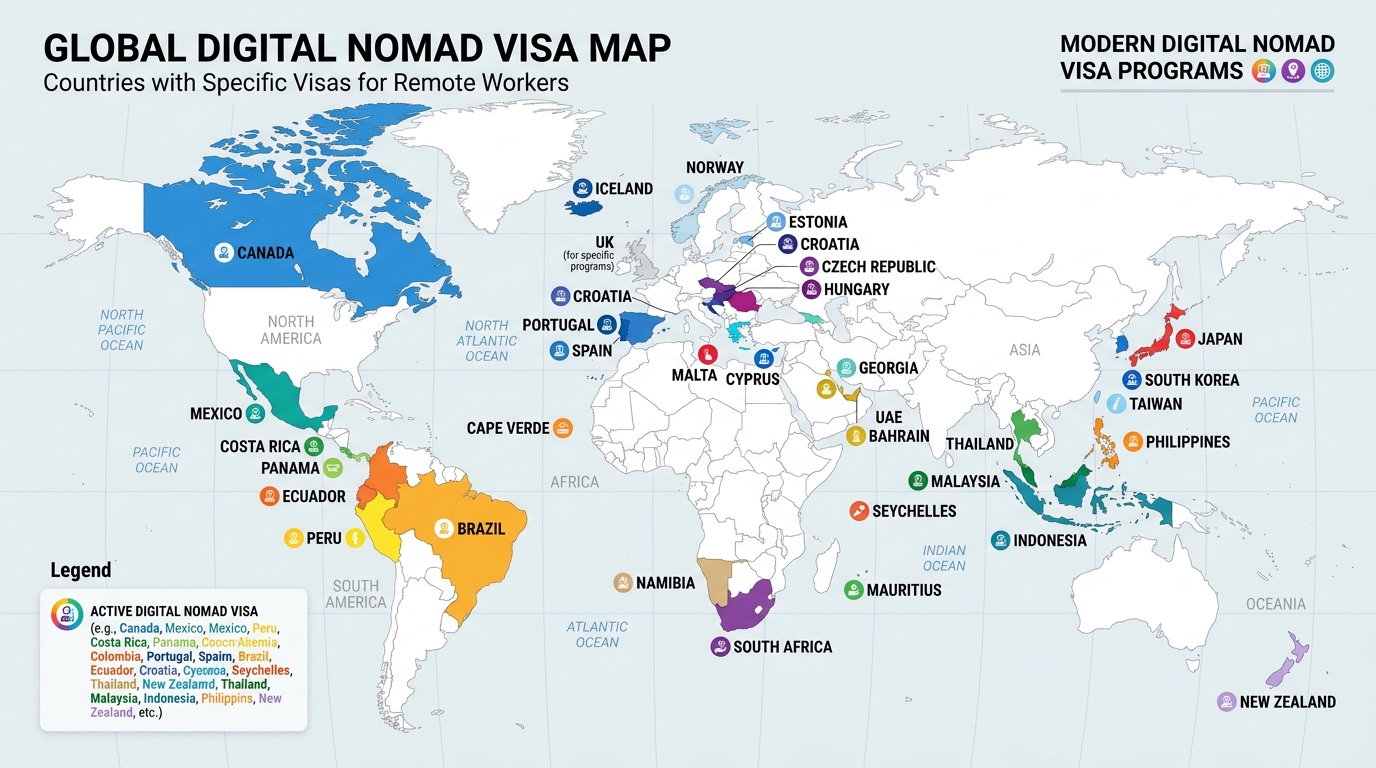
Many countries, including Portugal, Spain, Thailand, Estonia, and Dubai, offer digital nomad visas, allowing remote workers to live abroad legally while enjoying flexible lifestyles and cultural experiences.
Are you wondering what countries have digital nomad visas today? This comprehensive guide reveals top global destinations to legally live, work, and thrive as a remote professional.
If you want to know what countries have digital nomad visas, you are in the right place. We cover income requirements, application steps, and legal frameworks across Europe, Asia, and the Americas to help you secure your ideal remote work lifestyle.
Understanding What Countries Have Digital Nomad Visas
The landscape of remote work has shifted dramatically. Professionals no longer need to be tethered to a single office. Instead, they ask what countries have digital nomad visas that allow them to explore the globe while maintaining their careers. These specific legal frameworks grant you the right to reside in a foreign country while earning an income from an employer or clients based outside that host nation.
When people ask what countries have digital nomad visas, they are looking for stability. Traditional tourist visas restrict your ability to stay long-term and often exist in a legal gray area regarding remote work. A dedicated remote work permit provides a clear, legal pathway. You get to enjoy tax clarity, long-term housing options, and the peace of mind that you are fully compliant with local immigration laws. We will break down exactly what countries have digital nomad visas, categorized by region, so you can easily plan your next big move.
Europe: Historic Hubs for Remote Workers

Europe remains a top choice when professionals research what countries have digital nomad visas. With excellent infrastructure, robust public transport, and unparalleled cultural heritage, the European continent offers a diverse range of options for independent workers.
Portugal
Portugal consistently ranks at the top of lists detailing what countries have digital nomad visas. The D8 visa allows remote workers to live in the country for up to a year, with a clear path to long-term residency. You must prove a monthly income of around €3,280. Cities like Lisbon and Madeira have dedicated infrastructures for expats, including extensive coliving spaces and community events.
Spain
When evaluating what countries have digital nomad visas, Spain is impossible to ignore. Their program caters to non-EU citizens who want to live in places like Barcelona, Madrid, or Valencia. You must earn roughly €2,646 per month and prove you have worked remotely for at least a year. Spain also offers reduced tax rates for remote professionals, making it highly attractive for those managing complex freelance contracts.
Croatia
Croatia offers a streamlined pathway for digital nomads. If you are researching what countries have digital nomad visas with beautiful coastlines, Croatia is a winner. The permit lasts up to 12 months. Applicants need a monthly income of approximately €2,300. You will also need to secure local housing and provide a clear criminal background check before you apply.
Estonia
Estonia pioneered the e-residency concept and was one of the first answers to the question of what countries have digital nomad visas. The country offers a highly digitized society where almost all government services are available online. Applicants must demonstrate a monthly income of €3,504. You can choose between a short-stay (Type C) or long-stay (Type D) visa depending on your travel plans.
Malta
Malta is an ideal Mediterranean base. If you love the sea and frequently search what countries have digital nomad visas, Malta’s Nomad Residence Permit should be on your radar. The minimum income requirement is €3,500 per month. The application process is efficient, and the island boasts widespread English proficiency, making integration seamless.
Italy
Italy recently introduced its own framework for highly skilled remote workers. For those asking what countries have digital nomad visas with incredible culinary and historical scenes, Italy is a dream. You need an annual income of roughly €28,000, comprehensive health coverage, and proof of adequate accommodation.
Europe offers some of the most stable and culturally rich environments for remote professionals. When you look at what countries have digital nomad visas in this region, you find clear paths to long-term residency and integration into local communities.
The Americas: Tropical and Vibrant Destinations

If you prefer warmer climates and vibrant cultures, you might wonder what countries have digital nomad visas in the Americas and the Caribbean.
Costa Rica
Costa Rica is a haven for nature lovers. When asking what countries have digital nomad visas that offer a relaxed lifestyle, Costa Rica’s Rentista and digital nomad programs stand out. You need a monthly income of $3,000 to qualify. The visa grants a one-year stay with an option to renew, allowing you to work from lush rainforests or pristine beaches.
Mexico
Mexico has long been a favorite for North American expats. If you want to know what countries have digital nomad visas with an incredibly low cost of living, Mexico’s Temporary Resident Visa is perfect. You must show a monthly income of around $1,620 or significant bank savings. Hubs like Mexico City and Playa del Carmen offer lightning-fast internet and thriving expat networks.
Barbados
The Caribbean has aggressively courted remote workers. Barbados offers the Welcome Stamp, answering the call for what countries have digital nomad visas in island paradises. The program requires an annual income of $50,000. It costs $2,000 to apply as an individual, but it provides a full 12 months of legal residence without local income tax obligations.
Uruguay
Uruguay is a stable, progressive South American option. For those researching what countries have digital nomad visas with no minimum income requirements, Uruguay is highly accessible. You can enter as a tourist and apply online, securing a 180-day permit with minimal friction.
The Americas provide a brilliant mix of affordability, natural beauty, and relaxed visa requirements. Understanding what countries have digital nomad visas here allows you to trade a conventional office for a tropical workspace.
Asia & The Middle East: High-Tech and High-Growth

For professionals seeking rapid innovation and distinct cultural shifts, exploring what countries have digital nomad visas in Asia and the Middle East reveals incredible opportunities.
United Arab Emirates (Dubai)
Dubai offers a one-year virtual working program. When high-earning professionals ask what countries have digital nomad visas with zero income tax, Dubai is a premier choice. You must prove a monthly income of $5,000. The infrastructure is world-class, offering unmatched networking opportunities and premium amenities.
Malaysia
Malaysia offers a highly accessible remote work pass. If you want to know what countries have digital nomad visas with a great balance of cost and internet speed, Malaysia is top-tier. The income requirement is around $2,000 per month. Kuala Lumpur provides a modern cityscape, high English proficiency, and an excellent base for exploring Southeast Asia.
Japan
Japan recently entered the remote work arena. For tech enthusiasts wondering what countries have digital nomad visas, Japan now allows a six-month stay for remote workers. You must earn roughly $66,400 annually and hold private health insurance. While it does not offer an immediate extension, it provides unprecedented access to a fascinating culture.
Thailand
Thailand has long been the unofficial capital of the remote work world. Now, they offer official long-term resident options. When searching what countries have digital nomad visas in Southeast Asia, Thailand’s program requires high annual earnings but rewards you with an incredibly low cost of living, fantastic food, and vibrant cities like Chiang Mai and Bangkok.
Asia and the Middle East offer dynamic, fast-paced environments. Knowing what countries have digital nomad visas in these regions helps you tap into emerging markets and unparalleled technological infrastructure.
Comparison Table: What Countries Have Digital Nomad Visas
To simplify your research into what countries have digital nomad visas, use this comparison table outlining the key requirements for top destinations in 2026.
|
Country |
Monthly Income Requirement |
Visa Duration |
Key Benefit |
|---|---|---|---|
|
Portugal |
€3,280 |
1 Year (Renewable) |
Path to permanent residency |
|
Spain |
€2,646 |
1 Year (Renewable) |
Lowered tax rates |
|
Malta |
€3,500 |
1 Year (Renewable) |
English-speaking population |
|
Costa Rica |
$3,000 |
1 Year (Renewable) |
High quality of life |
|
Malaysia |
$2,000 |
1 Year (Renewable) |
Very low cost of living |
|
Dubai (UAE) |
$5,000 |
1 Year |
Zero income tax |
|
Japan |
~$5,500 |
6 Months |
Incredible cultural immersion |
|
Barbados |
$4,166 |
1 Year |
Tropical island lifestyle |
Expert Insights on Relocating
When determining what countries have digital nomad visas that fit your unique situation, careful planning is paramount. Immigration experts emphasize that securing the visa is only the first step.
You must carefully manage your global footprint. Ensure you understand the implications for your remote work taxes, as spending more than 183 days in many countries triggers local tax residency. Experts advise setting up international banking solutions and securing comprehensive digital nomad insurance before you board your flight. Always check official government portals, like The US Department of State, to verify current processing times and entry requirements.
Furthermore, engaging with local communities upon arrival drastically improves your experience. Knowing what countries have digital nomad visas is helpful, but building a life there requires adaptability, respect for local customs, and proactive networking.
Common Mistakes to Avoid
As you research what countries have digital nomad visas, avoid these frequent pitfalls that can derail your relocation plans:
- Applying Too Late: Visa processing can take anywhere from three weeks to three months. Never book non-refundable flights before your permit is officially approved.
- Ignoring Tax Liabilities: Just because you know what countries have digital nomad visas does not mean you understand their tax codes. Overstaying a tourist visa or ignoring local tax laws can lead to severe fines or deportation.
- Providing Incomplete Documentation: Immigration officers are meticulous. Failing to provide apostilled background checks, proper bank statements, or proof of adequate health insurance guarantees a rejection.
- Misunderstanding the Internet Infrastructure: Do not assume every beautiful beach town has fiber-optic broadband. Always verify connectivity speeds if your job requires heavy video conferencing.
When you carefully navigate what countries have digital nomad visas, you open the door to unparalleled personal and professional growth. Whether you choose the historic streets of Europe or the bustling tech hubs of Asia, the world is ready to accommodate your remote career.
To succeed, you must stay informed, prepare your documentation meticulously, and choose a destination that aligns with your financial capabilities and lifestyle goals. Knowing what countries have digital nomad visas is the ultimate key to unlocking a borderless life. Start gathering your paperwork, consult with a tax professional, and take the leap into global mobility today.
FAQs
What exactly is a digital nomad visa?
A remote work permit allows you to legally live in a foreign country while earning an income from an employer or business located outside of that host country. It bridges the gap between a standard tourist visa and a traditional work permit.
What countries have digital nomad visas with the lowest income requirements?
Countries like Colombia, Uruguay, and Argentina offer some of the most accessible financial thresholds. Uruguay, for instance, allows you to apply with virtually no set minimum income, provided you can support yourself.
Do I have to pay local taxes on a remote work visa?
It depends heavily on the destination. Some nations, like the UAE, offer zero income tax. Others, like Spain, offer reduced rates. You typically become a tax resident if you stay longer than 183 days, so always consult a financial advisor.
Can I bring my family with me on these visas?
Yes, most programs allow you to bring a spouse and dependents. However, the minimum monthly income requirement usually increases for each additional family member you bring.
What countries have digital nomad visas that lead to permanent residency?
Portugal and Spain are prime examples. Time spent on these specific visas can count toward the years required to apply for permanent residency and, eventually, citizenship.
How long does it take to get approved?
Processing times vary wildly. Some Caribbean nations process applications in a matter of days, while European programs like those in Spain or Portugal can take up to two or three months.
Is health insurance mandatory for these programs?
Absolutely. Almost every nation requires you to hold comprehensive medical insurance that covers you for the entire duration of your intended stay, including medical evacuation.
What countries have digital nomad visas in Asia?
Malaysia, Thailand, South Korea, and Japan all offer variations of remote work permits. Malaysia is particularly popular for its balance of affordable living and straightforward application process.
Can I apply for these visas if I am a freelancer?
Yes. Freelancers, independent contractors, and remote employees are all generally eligible. You simply need to provide client contracts, invoices, and bank statements to prove your sustained remote income.
Do I apply online or at an embassy?
This varies by government. Many programs, especially in the Caribbean and South America, feature fully digitized online portals. However, several European nations still require you to submit physical paperwork at an embassy or consulate in your home country.