
This guide provides a deep dive into crafting the ultimate Bali itinerary while managing your expenses. You will discover practical advice on regions, transportation, daily budgets, and cultural etiquette, ensuring your vacation is smooth, affordable, and deeply memorable.
Essential Pre-Trip Planning
Before you book your flight, understanding the foundation of a great trip sets you up for success. Preparation eliminates stress and helps you focus entirely on enjoying your vacation.
Visas and Entry Requirements
Most international visitors enter Indonesia using a Visa on Arrival (VoA) or an electronic Visa on Arrival (e-VoA). This visa grants you a 30-day stay and can be extended once for an additional 30 days. Ensure your passport has at least six months of validity remaining from your date of arrival.
Additionally, you must pay the Bali Tourism Levy before or upon arrival. This small fee funds environmental and cultural preservation across the island. Always carry digital and physical copies of your travel documents.
The Best Time to Visit
Bali experiences two main seasons:
- Dry Season (April to October): Offers the most reliable sunshine and lower humidity. June to August are the peak tourist months, meaning higher prices and larger crowds.
- Rainy Season (November to March): Characterized by short, heavy afternoon downpours. The island turns incredibly green, and you will find better deals on accommodation.
Packing Your Travel Essentials
Pack light, breathable clothing. The tropical climate means you will live in swimwear, shorts, and linen shirts. Do not forget to bring modest clothing (like a sarong or a shirt with sleeves) for temple visits. Other travel essentials include a high SPF coral-safe sunscreen, insect repellent, a universal power adapter, and a reliable dry bag for boat trips or waterfall hikes.
Understanding Bali’s Unique Regions
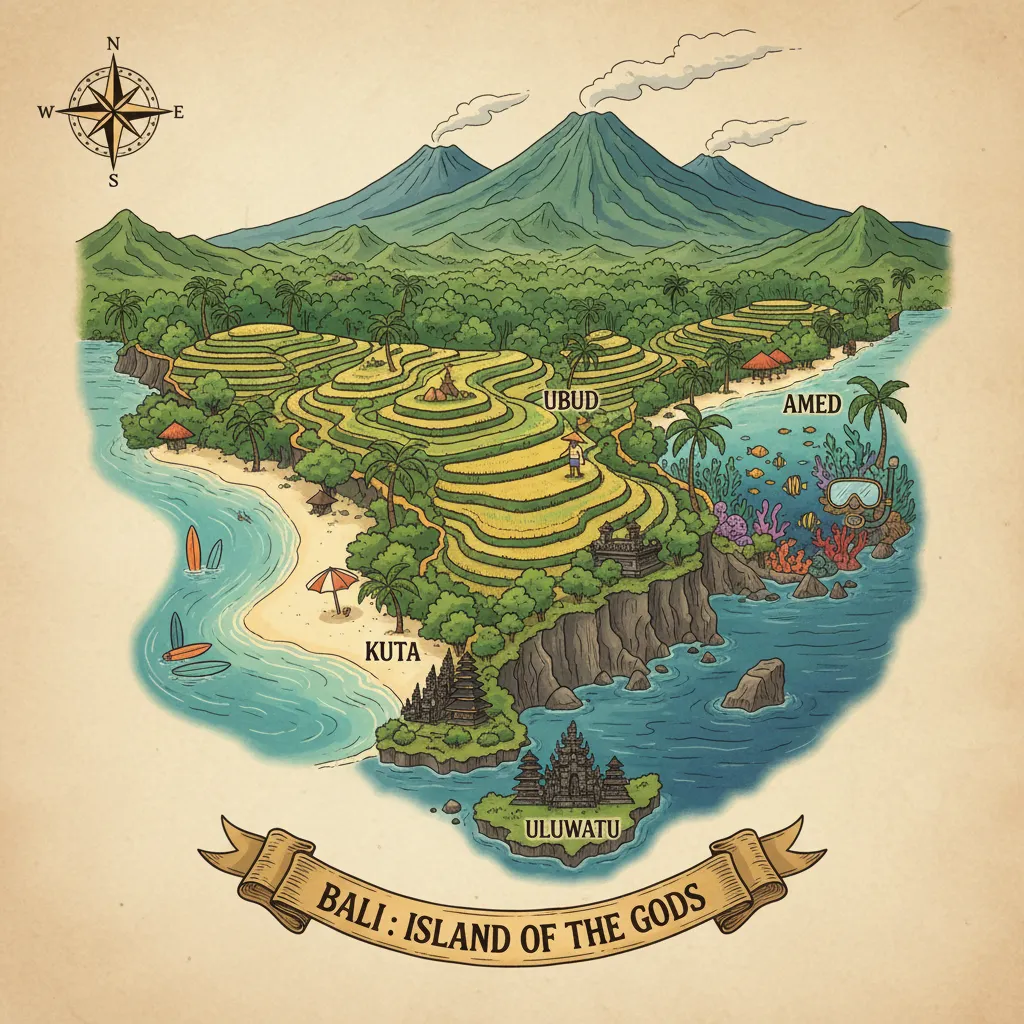
Choosing where to stay dramatically impacts your experience. Each area offers a distinct atmosphere, catering to different travel styles and budgets.
Canggu: Surf Culture and Trendy Cafes
Canggu attracts remote workers, surfers, and food enthusiasts. It features excellent surf breaks, vibrant beach clubs, and an endless array of health-conscious cafes. It serves as a fantastic base if you want an active social scene.
Ubud: The Cultural Heart
Surrounded by rainforests and terraced rice paddies, Ubud is the center for traditional crafts, dance, and spiritual wellness. It offers world-class yoga studios, serene retreats, and easy access to famous waterfalls. Check out our Ubud wellness guide for more specific retreat recommendations.
Uluwatu: Dramatic Cliffs and Pristine Beaches
Located on the Bukit Peninsula, Uluwatu boasts some of the best surf breaks globally and stunning white-sand beaches hidden beneath limestone cliffs. The vibe here is relaxed, focusing heavily on ocean activities and spectacular sunset views.
Seminyak: Luxury and Nightlife
If you prefer upscale resorts, boutique shopping, and refined dining, Seminyak is your ideal destination. It offers a slightly more polished experience than neighboring areas, complete with famous beach clubs right on the sand.
The Nusa Islands: Rugged Adventure
A short boat ride from the mainland takes you to Nusa Penida, Nusa Lembongan, and Nusa Ceningan. These islands offer dramatic landscapes, incredible snorkeling with manta rays, and a quieter, less developed atmosphere.
Regional Comparison Table
|
Region |
Best For |
Vibe |
Price Range |
|---|---|---|---|
|
Canggu |
Surfing, Cafes, Nightlife |
Trendy, Busy |
Moderate to High |
|
Ubud |
Culture, Wellness, Nature |
Zen, Spiritual |
Low to High |
|
Uluwatu |
Beaches, Sunsets, Surfing |
Laid-back, Scenic |
Moderate to High |
|
Seminyak |
Shopping, Fine Dining |
Upscale, Lively |
High |
|
Nusa Islands |
Adventure, Snorkeling |
Rugged, Remote |
Low to Moderate |
The Ultimate 14-Day Bali Itinerary
Crafting the right schedule prevents travel fatigue. This two-week route balances relaxation, culture, and adventure.
Days 1-3: Arrive and Unwind in Seminyak
Start your trip with ease. Spend your first few days recovering from jet lag by the pool or at a beach club.
- Day 1: Arrive at Ngurah Rai International Airport. Settle into your hotel and enjoy a casual dinner.
- Day 2: Walk along Double Six Beach, browse boutique shops, and watch the sunset at a beachfront venue.
- Day 3: Take a morning surf lesson or visit a high-end spa before preparing to move inland.
Days 4-7: Immerse Yourself in Ubud
Transition from the coast to the jungle to experience the spiritual side of the island.
- Day 4: Travel to Ubud. Visit the Sacred Monkey Forest Sanctuary and explore the central art market.
- Day 5: Wake up early to walk the Campuhan Ridge. Later, visit the Tegalalang Rice Terraces and swing over the jungle canopy.
- Day 6: Dedicate this day to waterfalls. Hire a driver to visit Tibumana, Tukad Cepung, and Tegenungan.
- Day 7: Take a traditional Balinese cooking class or participate in a purification ceremony at Tirta Empul Temple.
Days 8-10: Explore the Nusa Islands
Leave the mainland behind for raw, dramatic scenery.
- Day 8: Catch a fast boat from Sanur to Nusa Penida. Rent a scooter or hire a driver to visit Kelingking Beach and Broken Beach.
- Day 9: Book a morning snorkeling tour to swim with majestic manta rays at Manta Point.
- Day 10: Visit Diamond Beach at sunrise. Take the afternoon boat back to the mainland and head south to the Bukit Peninsula.
Days 11-14: Beach Hopping in Uluwatu
End your trip with stunning coastlines and relaxed surf town energy.
- Day 11: Settle into your Uluwatu accommodation. Spend the afternoon swimming at Padang Padang Beach.
- Day 12: Visit the Uluwatu Temple perched on the cliffs. Stay for the captivating Kecak Fire Dance at sunset.
- Day 13: Explore hidden beaches like Thomas Beach or Bingin. Enjoy a seafood dinner on the sand at Jimbaran Bay.
- Day 14: Enjoy a final morning coffee overlooking the ocean before heading to the airport for your departure.
Read our full island hopping itinerary to expand your trip to neighboring Lombok and the Gili Islands.
Budgeting Guide and Money Tips

Understanding costs helps you stretch your travel funds further. Your daily expenses will vary greatly depending on your travel style.
Daily Budget Breakdown
- Budget Traveler ($30 – $50/day): Stays in hostels or basic guesthouses. Eats primarily at local warungs (small family-owned restaurants). Rents a scooter for transport.
- Mid-Range Traveler ($70 – $150/day): Stays in private boutique hotels or small villas. Mixes local food with western-style cafes. Hires a private driver for day trips.
- Luxury Traveler ($250+/day): Stays in five-star resorts or large private villas. Dines at fine-dining restaurants and upscale beach clubs.
Managing Your Money
The local currency is the Indonesian Rupiah (IDR). While many modern cafes, hotels, and beach clubs accept credit cards, cash remains king. You will need cash for local markets, small warungs, parking fees, and temple donations.
Always use ATMs attached to official bank branches (like BCA, Mandiri, or BNI) rather than standalone machines in convenience stores, as they are more secure. If you need to exchange physical currency, use authorized money changers and count your cash before leaving the counter.
Transportation: Getting Around Safely
Navigating the roads requires patience and awareness. The traffic, especially in the south, can be heavily congested.
Renting a Scooter
Renting a scooter offers the most freedom and is highly cost-effective. However, it is not recommended for inexperienced riders. The traffic moves organically, often ignoring formal lanes. If you rent a scooter, you must wear a helmet, carry an international driving permit, and ensure your travel insurance covers motorbike accidents.
Ride-Hailing Apps
Apps like Grab and Gojek operate similarly to Uber and are incredibly useful for short distances. You can order a car or hop on the back of a motorbike taxi (ojek) to beat the traffic. Note that some local villages restrict ride-hailing pickups, so you may need to use local transport in certain areas.
Hiring a Private Driver
For full-day excursions, hiring a private driver is the safest and most comfortable option. A driver costs roughly $40 to $60 for an 8-to-10-hour day. This allows you to relax in an air-conditioned vehicle while a local expert navigates the roads and helps plan your route. Look at our transportation safety guide for trusted driver recommendations.
Balinese Culture, Etiquette, and Temples
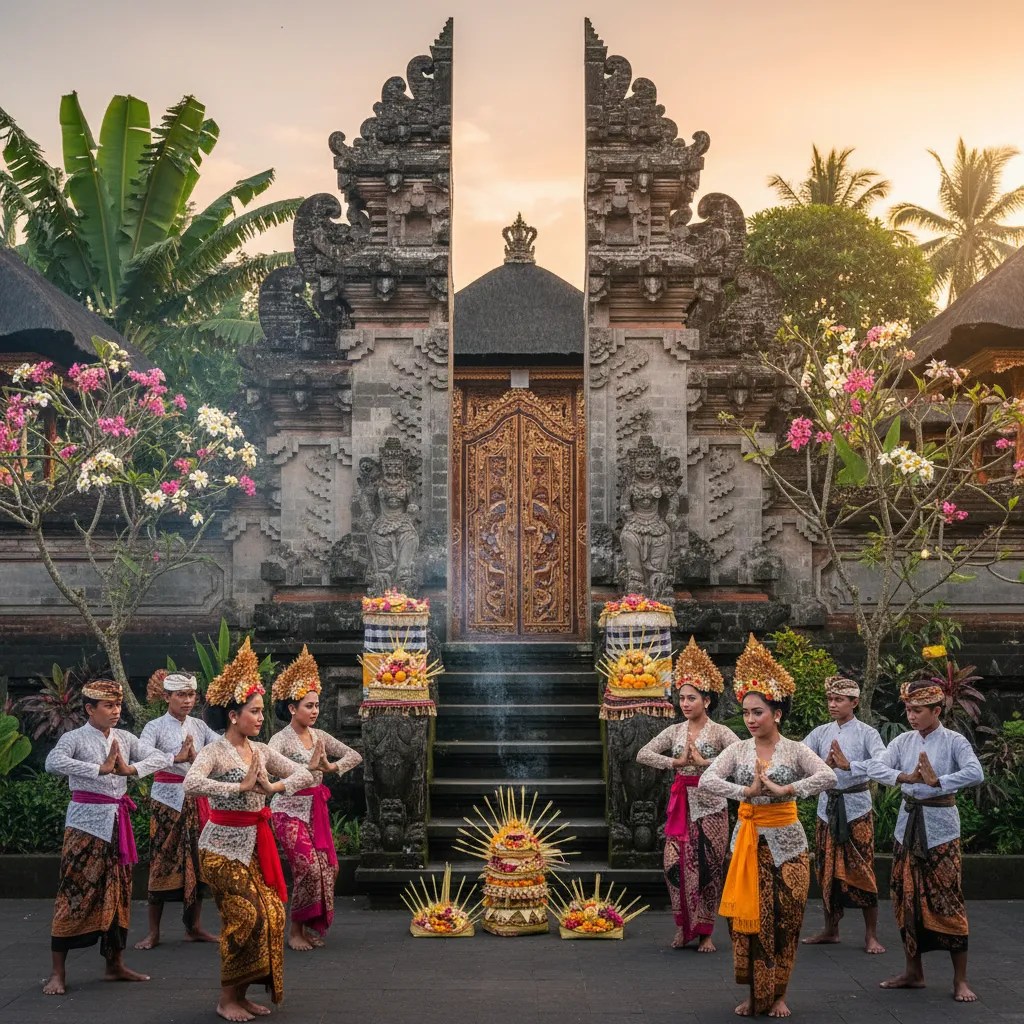
Respecting local customs enriches your travel experience and ensures a warm welcome from the community. Balinese Hinduism shapes daily life, evident in the thousands of temples and daily offerings.
Temple Etiquette
Temples are sacred spaces. Both men and women must cover their knees and shoulders before entering. Most temples rent or lend sarongs at the entrance. Never point your feet toward the altar, and avoid walking directly in front of someone who is praying.
Canang Sari (Daily Offerings)
You will see small woven palm-leaf baskets filled with flowers, rice, and incense on sidewalks, stairs, and dashboards. These are canang sari, daily offerings to the gods. Be careful not to step on them, as doing so is considered highly disrespectful.
Important Holidays
Be aware of Nyepi, the Balinese Day of Silence, which usually falls in March. For 24 hours, the entire island shuts down. No one is allowed on the streets, the lights are turned off, and the airport closes. It is a profound cultural experience, but you must remain inside your accommodation.
Food and Dining: What to Eat
The culinary scene is spectacular, blending traditional Indonesian flavors with world-class international cuisine.
Traditional Dishes You Must Try
- Nasi Goreng: The iconic Indonesian fried rice, typically served with a fried egg on top.
- Mie Goreng: The noodle equivalent of Nasi Goreng, equally delicious and ubiquitous.
- Babi Guling: Spit-roasted suckling pig, a specialty often served at ceremonies but available in specialized warungs.
- Sate Lilit: Minced meat (usually pork or fish) mixed with grated coconut and spices, wrapped around a lemongrass stick and grilled.
- Gado-Gado: A slightly warm salad of boiled vegetables, hard-boiled eggs, and tofu, smothered in a rich peanut sauce.
Navigating “Bali Belly”
Traveler’s diarrhea is a common issue. To avoid it, stick to bottled or filtered water—never drink from the tap. Ensure your food is cooked thoroughly and served hot. If you do get sick, stay hydrated with coconut water and electrolyte packets, and visit a local pharmacy for medication.
Common Mistakes to Avoid
Even seasoned travelers make errors when visiting a new destination. Keep these pitfalls in mind to ensure a flawless trip.
- Overpacking Your Itinerary: Travel times between towns look short on a map but take much longer due to traffic. Plan a maximum of two major activities per day.
- Ignoring the Ocean Currents: The beaches on the southern coast have strong, unpredictable rip currents. Only swim between the designated flags.
- Engaging Aggressively with Monkeys: The macaques at temples and forests are wild animals. Do not look them directly in the eye, and secure your sunglasses, phones, and loose jewelry.
- Drinking Arak from Unverified Sources: Arak is a local distilled spirit. While traditional, poorly distilled batches can contain methanol. Only consume alcoholic beverages from reputable bars and restaurants.
Expert Tips for a Better Trip
A few insider strategies elevate your vacation from good to exceptional.
Get a Local eSIM
Staying connected makes navigating, translating, and booking transport infinitely easier. Purchase an eSIM online before you fly, or buy a physical SIM card from a provider like Telkomsel upon arrival.
Use WhatsApp for Everything
WhatsApp is the primary mode of communication on the island. You will use it to contact your driver, make restaurant reservations, book spa appointments, and communicate with your hotel or villa host.
Embrace Sustainable Travel
Tourism puts immense pressure on local infrastructure and nature. Refuse single-use plastics, bring a reusable water bottle (many cafes offer free filtered water refills), and support local businesses rather than massive international chains. Check out our sustainable tourism initiatives to find eco-friendly stays and tours.
Every good Bali travel guide emphasizes the importance of pacing yourself. The island reveals its true charm when you slow down and observe the details.
Conclusion
A well-planned trip allows you to experience the perfect blend of rich culture, breathtaking nature, and modern luxury. By following this Bali travel guide, you can confidently navigate the island, manage your budget, and build an itinerary that creates lifelong memories. Start booking your flights today and prepare for the adventure of a lifetime.
Frequently Asked Questions (FAQs)
1. How many days do I need for a trip to Bali?
You should plan for a minimum of 10 to 14 days. This gives you enough time to recover from the long flight and explore at least three different regions, such as the beaches of the south, the jungles of the interior, and the neighboring islands.
2. Is Bali safe for solo travelers?
Yes, it is highly regarded as a safe destination for solo travelers. Violent crime is rare. However, petty theft, like bag snatching, can occur. Always use common sense, secure your valuables, and avoid walking alone on unlit beaches late at night.
3. Do I need to carry cash everywhere?
While credit cards are widely accepted at hotels, larger restaurants, and beach clubs, you absolutely need cash for smaller transactions. Taxis, street food vendors, local markets, and temple entry fees require Indonesian Rupiah in cash.
4. What is the best way to get from the airport to my hotel?
The most stress-free option is arranging an airport transfer through your accommodation prior to arrival. Alternatively, you can use the official airport taxi stand or book a ride through the Grab or Gojek apps at the designated rideshare lounge.
5. Can I drink the tap water?
No, tap water is not safe to drink. Always consume bottled, boiled, or heavily filtered water. Most hotels and quality villas provide complimentary drinking water. It is safe to brush your teeth with tap water, provided you do not swallow it.
6. Do I need an international driving permit to rent a scooter?
Legally, yes. You must carry an International Driving Permit (IDP) alongside your home country’s motorcycle license. If the police pull you over and you do not have an IDP, you will face a fine. Furthermore, driving without proper licensing usually voids your travel medical insurance.
7. How much should I tip?
Tipping is not strictly required but is always deeply appreciated. Many mid-range and high-end restaurants automatically add a 5% to 10% service charge to the bill. For private drivers, a tip of 50,000 to 100,000 IDR per day is a generous gesture for good service.
8. What is the Bali Tourism Levy?
Implemented recently, the tourism levy is a mandatory fee for all foreign tourists arriving on the island. The funds are strictly allocated to preserving the local environment and cultural heritage. It is best paid online via the official government portal before you arrive to save time at the airport.
9. Are the monkeys dangerous?
Monkeys are wild, opportunistic animals. They are not inherently dangerous, but they will aggressively seek food or shiny objects. Secure your belongings inside a zipped bag, do not carry plastic water bottles, and never try to touch or feed them outside of guided instructions.
10. Do I need vaccinations before visiting?
While no specific vaccines are legally required for entry, doctors generally recommend being up to date on routine vaccines, as well as Hepatitis A and Typhoid. Malaria is rare, but Dengue Fever is present, so consistent use of insect repellent is your best defense. Always consult your healthcare provider before traveling.