
This comprehensive guide covers everything you need to know about working abroad legally. You will learn the definition and purpose of remote work permits, the undeniable benefits they offer, and the step-by-step application process.
Working from a beachfront cafe in Costa Rica or a bustling plaza in Spain sounds like a dream, but you need the right documentation to make it a reality legally. If you want to relocate and keep your current job, you might be asking: what is a digital nomad visa and how do you get one? This specialized permit lets you live in a foreign country while working remotely for an employer or clients located outside that host nation. As remote work becomes a permanent fixture for many professionals, understanding how these visas function is your first step toward building a location-independent lifestyle.
Understanding the Remote Work Phenomenon
When you start exploring the digital nomad lifestyle, you quickly realize that tourist visas do not cover working abroad. A digital nomad visa legally allows visitors to work remotely for a foreign country and receive foreign income for an extended period. Governments introduced these permits to attract high-earning professionals who boost the local economy without taking jobs away from local citizens.
The Purpose Behind the Permit
The primary purpose of these temporary residence visas is to bridge the gap between tourism and traditional immigration. Before these programs existed, remote workers often relied on tourist visas, which technically prohibit any form of work, even for overseas companies. Operating in this gray area created legal and tax risks. By implementing dedicated visas, countries provide a clear, legal framework for professionals to contribute to the local economy through rent, dining, and tourism, while maintaining their employment back home.
Digital Nomad Visa vs. Tourist Visa
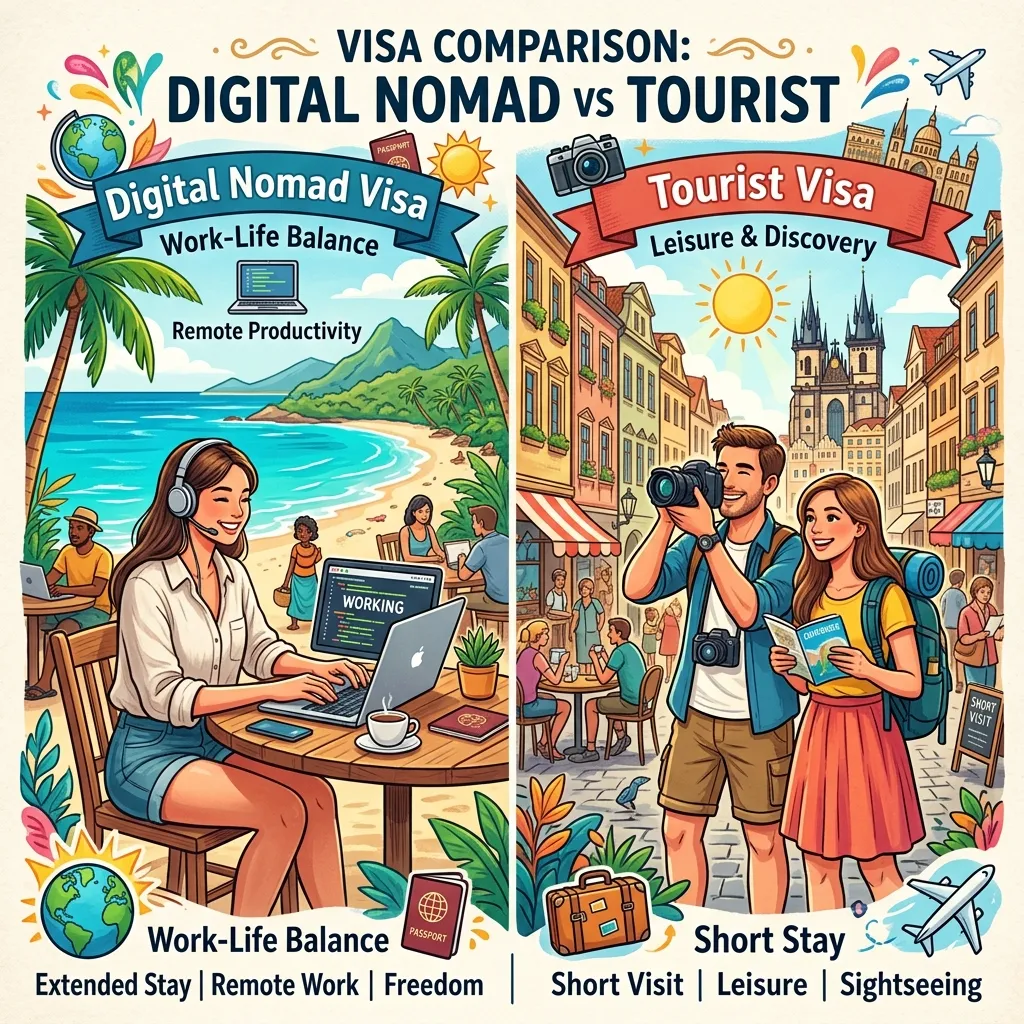
Understanding the distinction between these two documents is crucial. A tourist visa permits short-term travel strictly for leisure. You cannot legally work, sign long-term leases, or open local bank accounts. In contrast, a remote work visa explicitly grants you the right to perform your job duties while residing in the host country. These permits usually last for a year, with options to renew, and often provide pathways to secure local services like healthcare and banking.
The Undeniable Benefits of Securing a Remote Work Visa
Choosing to apply for official documentation offers massive advantages over hopping borders on tourist stamps. Securing the right visa transforms how you experience your host country.
Legal Peace of Mind
Working on a tourist visa forces you to hide your professional life. An official permit gives you legal peace of mind. You can openly discuss your work, rent apartments legally, and cross borders without worrying about immigration officers questioning the length or purpose of your stay.
Access to Essential Services
With proper residency status, you gain access to infrastructure that tourists cannot use. You can sign up for local mobile phone contracts, register for public healthcare in some countries, and enroll your children in local schools. You can also open bank accounts, making it much easier to handle daily expenses and avoid exorbitant foreign transaction fees.
Favorable Tax Conditions
Many programs include enticing tax incentives. Some countries offer a flat, reduced tax rate for foreign remote workers, while others waive local income taxes entirely as long as your income originates outside their borders. This can help you maximize your earnings while enjoying a lower cost of living abroad.
Community and Networking

Countries that actively promote these visas attract vibrant communities of expats and entrepreneurs. You will find coworking spaces filled with like-minded individuals, offering incredible networking opportunities. Building relationships with other global professionals can lead to new business ventures and lifelong friendships.
How to Apply for a Digital Nomad Visa
The application process varies significantly from one nation to another, but most governments follow a similar framework. Understanding these general steps will help you prepare a strong application.
General Eligibility Criteria
To qualify, you must prove that you can support yourself without participating in the local labor market. Most countries enforce strict income requirements. You must demonstrate a consistent monthly or annual income that meets their specific threshold. Additionally, you must have a clean criminal record and hold comprehensive medical coverage. You will also need to show that your job allows you to work from anywhere.
Required Documentation
Gathering your paperwork is often the most time-consuming part of the process. You will generally need to provide:
- A valid passport with at least six months of validity remaining.
- Proof of income through bank statements, tax returns, or pay stubs.
- An employment contract or business ownership documents showing your company is located outside the host country.
- A comprehensive international health insurance policy. You can read more about health insurance requirements to ensure your plan meets international standards.
- A federal background check or police clearance certificate.
- Proof of accommodation, such as a rental agreement or hotel booking for your initial stay.
Step-by-Step Application Process
- Choose your destination and review their specific consulate requirements.
- Gather all required documents. You may need to translate and apostille certain legal documents like background checks and marriage certificates.
- Submit your application. Some countries allow fully online submissions, while others require an in-person appointment at your nearest embassy or consulate.
- Pay the non-refundable application fee.
- Wait for processing. Approval times range from a few days to several months.
- Upon arrival in your host country, register with the local police or immigration office to receive your physical residence card.
Country-Specific Examples
Dozens of nations now offer these permits. Let us look at a few popular options to understand how the requirements differ.
Spain
Spain offers a highly sought-after permit under its Startup Act. It allows non-EU nationals to live and work in Spain for up to a year, renewable for up to three years. Applicants must earn roughly 200% of the Spanish minimum wage, which translates to about $2,800 per month. Spain also offers a favorable flat tax rate of 24% on your income, making it an attractive option for high earners.
Costa Rica

Costa Rica appeals to those seeking a relaxed, nature-focused lifestyle. Their program requires an income of $3,000 per month for individuals and $4,000 for families. The visa lasts for one year and can be renewed for a second year. Notably, Costa Rica completely exempts visa holders from local income taxes on their foreign earnings.
Estonia
Estonia was the first country to launch a dedicated digital nomad visa. You can apply for a short-stay or long-stay visa, depending on your plans. Applicants need to prove a monthly gross income of roughly €3,500. Estonia is famous for its digital infrastructure, making it incredibly easy to manage your life and business online.
Weighing the Pros and Cons
While the lifestyle sounds glamorous, moving across the world comes with distinct challenges. You must weigh the pros and cons before committing to this path.
The Advantages
The biggest advantage is freedom. You have the ultimate flexibility to choose your environment, whether that means escaping cold winters or exploring new cultures. You can immerse yourself in a new language, try new foods daily, and spend your weekends exploring historical landmarks. Additionally, geo-arbitrage allows you to earn a strong currency while living in a country with a lower cost of living, helping you save money faster or enjoy a higher standard of living.
The Disadvantages
The lifestyle can be deeply isolating. Constantly moving makes it difficult to maintain long-term relationships and stay connected with family back home. You also have to navigate complex administrative hurdles, from securing your visa to figuring out international tax obligations. Time zone differences can also create massive headaches if you need to attend mandatory meetings with a team located eight hours behind you. Finally, the costs of flights, visa fees, and short-term rentals can add up quickly.
Common Mistakes to Avoid When Applying
Many applicants face delays or rejections because they overlook crucial details. Avoid these common pitfalls to ensure a smooth process.
- Applying with insufficient passport validity: Make sure your passport is valid for at least six months beyond your intended stay.
- Providing the wrong type of health insurance: Basic travel insurance rarely satisfies the requirements. You need comprehensive medical coverage that covers repatriation and emergency care.
- Failing to translate documents: If a country requires official translations, you must use a certified translator. Standard translations will result in rejection.
- Underestimating the income threshold: Immigration officers look at your net income, not just gross revenue. Make sure your bank statements clearly show consistent deposits that meet the minimum requirement.
- Entering on a tourist visa with the intent to switch: While some countries allow you to switch your status after arriving, many require you to apply from your home country. Always check the specific rules before booking your flight.
Pro Tips for a Successful Application and Transition
To make your relocation as seamless as possible, follow these expert insights.
- Start early: Begin digital nomad visa gathering your documents at least three months before your intended departure date. Background checks and apostilles can take weeks to process.
- Consult a tax professional: Moving abroad complicates your tax situation. Speak with a professional to understand dual taxation treaties and how your move impacts your domestic tax liabilities. You can check resources like the IRS foreign income guidelines to start your research.
- Join local community groups online: Before you arrive, join expat groups on social media. These communities are incredibly helpful for finding housing, understanding local customs, and meeting new people quickly.
- Negotiate flexibility with your employer: If you are an employee, ensure your company supports your move. Discuss data security protocols and confirm that your working hours align with their expectations despite the time zone change.
Digital Nomad Visa Comparison Table
To help you decide which destination suits your needs, here is a breakdown of popular remote work visas.
|
Country |
Monthly Income Requirement |
Visa Duration |
Tax Implications |
Application Method |
|---|---|---|---|---|
|
Spain |
~$2,800 |
1 year (renewable) |
24% flat tax rate |
Online or Consulate |
|
Costa Rica |
$3,000 |
1 year (renewable) |
Tax-exempt on foreign income |
Online |
|
Portugal (D8) |
~$3,500 |
Up to 1 year |
Subject to local tax laws |
Consulate |
|
Estonia |
~$3,800 |
1 year |
Tax resident after 183 days |
Consulate |
|
Malta |
~$3,000 |
1 year (renewable) |
Tax-exempt on foreign income |
Online |
Conclusion
Securing the right paperwork is the most important step in building your location-independent life. Now that you know what is a digital nomad visa, you can confidently evaluate your options, gather your documents, and choose the destination that best fits your personal and professional goals. Whether you want to explore the historic streets of Europe or the beaches of Central America, proper preparation ensures a smooth transition. Stop dreaming about working from anywhere and start organizing your application today!